 |
Got a Nasty Fight?
by Jane O'Donnell |
|
|
|
|
A longtime labor union official calls him Dr. Evil. The director of a
consumer group says he's "sleazy" and "sophomoric." And a liberal
newspaper columnist wrote that the tobacco, booze and gun lobbyists
portrayed in the movie Thank You for Smoking were a "pale
imitation of the reality of the Beltway's most outrageous advocate."
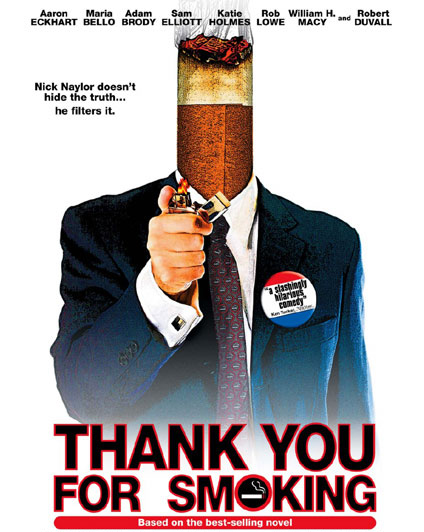
Even in this mudslinging city, it's hard to find a guy who provokes the sort of wrath Richard Berman does. Berman, hired by businesses, fights efforts such as further restricting drinking and driving, mandating healthier foods and raising the minimum wage. The former labor relations lawyer argues that many of the restrictions reduce our ability to make our own choices. He seldom mentions his clients, other than to say many are in the food and restaurant industries, and he represents them through a variety of non-profit groups he has set up. His targets range from Mothers Against Drunk Driving to the Ralph Nader-founded Center for Science in the Public Interest, which works on food issues, to labor unions. Berman is the best, and apparently most hated, example of a third party hired by companies to be their public face as they take on unpopular battles. Berman says the consumer, safety and environmental groups he targets rarely attract the kind of scrutiny that business does, and that's not fair. "Some of these companies are so shell-shocked by the attacks that they can't find the voice to fight back," he says. "Some of the positions Rick takes, he's better off taking than a highly visible public company," says Dick Rivera, former CEO of the restaurant chain T.G.I. Friday's, who has worked with Berman for 30 years. Michael Jacobson of the Center for Science in the Public Interest, a favorite Berman target, puts it another way: His clients "have PR problems and can't express themselves as nastily as he can." Berman, 63, says he specializes in "crisis prevention," or predicting where the watchdog groups plan to focus next. After years on the legal and government relations staffs of corporations and the U.S. Chamber of Commerce, Berman went out on his own in 1987, and in the mid-1990s used Philip Morris money to fight the move to put no-smoking sections in restaurants. He now has a staff of 28. And, though criticized by consumer groups for getting rich through his attacks, only Berman and his bookkeeper/wife know for sure what he makes. He says his public relations firm and five associated non-profit groups bring in about $10 million a year but that some of the money goes right back out for advertising. Targets: Unions, obesity suits Berman's latest campaign, launched this week, goes after labor unions with TV commercials and full-page ads in newspapers, including USA TODAY. It may prove as incendiary as one in May, paid for by Berman's Center for Union Facts, that accused labor unions of discriminating against minorities and bankrupting industries. He targets labor unions because, he says, they intimidate workers to get them to join. "Somebody's wasting a lot of money," says Stewart Acuff, the AFL-CIO's national director of organizing. "This guy is just another tool of right-wing anti-worker forces. The ads have been an attempt to create a negative impression, but for the amount of money spent on them they are remarkably poor." Berman spent the last couple of years fighting obesity-focused trial lawyers and consumer groups who have succeeded in getting trans fats out of many foods and soft-drink machines out of schools — the latter a move he finds ludicrous because high-calorie juice is allowed and diet drinks aren't. Last year, after Berman openly criticized the government's numbers, the Centers for Disease Control lowered the estimate of the annual number of deaths attributable to obesity from 400,000 to less than 26,000. Currently, he's predicting that when they're done with fat, the food-safety groups will focus more on demonizing caffeine. And MADD, he says, won't be happy until there is a breathalyzer in every car and social drinkers are scared into public sobriety. "These groups don't want to declare victory and refuse to go out of business," Berman says. "They keep moving the goal posts." Norm Brinker, former chairman of the restaurant company that owns Chili's and Maggiano's, hired Berman 35 years ago to help with labor relations issues when Brinker headed Steak & Ale. "Boy, oh boy, he was a barn burner right from the beginning," says Brinker. Brinker would tell restaurateurs: "You need him badly, more than you know you do." The groups that Berman goes after say that while watchdogs may need watching too, Berman is not the guy for the job. "He obviously has made a very monetarily successful career out of bashing, smearing and attacking environmentalists," says John Stauber, an author and head of the Center for Media and Democracy. Jacobson, the guy who calls him sleazy and sophomoric, says Berman uses CSPI "as a foil to tell (clients) they're going to go down the tubes unless they pay him to fend us off." Berman has taken out full-page ads in newspapers and magazines attacking Jacobson and his group for their positions on food safety and fat content. The watchdog groups challenge Berman's efforts to minimize risk — or deny its existence. "Nothing is a problem in Berman's world," says Melanie Sloan of Citizens for Responsibility and Ethics in Washington. Berman challenges what he says are their exaggerations. For example, while Stauber, who has written a book on mad cow disease, criticizes Berman's claims that the disease would never be a problem, Berman points to Stauber's contention that it could become an epidemic. The Berman method: •In-your-face advertising. Berman puts ads everywhere from buses to the back page of U.S. News & World Report shouting that the other side is trying to scare eaters, drinkers and workers into submission. The campaign to fight those who would blame the food industry for obesity cost about $1 million; this year's anti-union ads will cost close to $2 million. The ads are intentionally "edgy," he says, to get reporters to write about them and further spread the word. •Dirt digging and dissemination. He uses investigative reporting techniques to expose the funding, alleged misstatements and connections of consumer groups, their experts and often trial lawyers. His staff combs through government and consumer group data seeking inconsistencies and says they are seldom disappointed. •Internet wars. Berman says the Internet gave anyone with a computer a chance to be a consumer spokesman. And he's used it to fight back. For every consumer group website, including Stauber's PRWatch and SourceWatch, Berman seems to have one that uses similar techniques to discredit critics. Berman acknowledges buying domain names that were similar to some of CSPI's a few years ago to hijack people to his own websites. He shut them down after CSPI threatened a lawsuit. Larry Lindsey, who has been an economic adviser to the last three Republican presidents, heads Berman's First Jobs Institute, which helps educate young people about finances and tries to make them less distrustful of industry. Lindsey thinks Berman's lack of political correctness helps get the facts out that the government needs to hear. "What (Berman) does by raising these issues is point out some unintended consequences," says Lindsey, who runs an economic consulting firm. A champion of choice? Berman is an imposing, almost charming, guy. At 6-feet-2 inches and 245 pounds, he notes that he's well into the government's "obese" category. Sipping Campari and soda at lunch, Berman insists with only the slightest hint of irony that the 41-proof cocktail is "not drinking." It's clear that he's no amateur in debating a point. Indeed, when the movie based on Christopher Buckley's book Thank You for Smoking about a tobacco lobbyist with a gift for spin came out this year, both friends and detractors thought it was an apt portrayal of Berman. "Debating him or his henchmen on a TV show is a very peculiar experience, because they just make things up out of whole cloth," says Jacobson. "You're left trying to correct what he's saying or saying what you wanted to say." Sloan of Citizens for Responsibility and Ethics says Berman has "Orwellian speak down, turning black into white. He's marketing it as an issue of choice, and choice is a good marketing tool. How dare anyone try to take your options away?" But Rivera says Berman believes in his causes. "His fundamental philosophy is, 'Give people information and let them make their own mind up.' It's not just a career for him. He has conviction, and if he doesn't believe in it, he won't take up the cause." Buckley, by the way, says he doesn't know Berman, but thinks he should "keep up the good work" because there is "so much sanctimony" in Washington. Richard Bensinger, former director of organizing for the AFL-CIO, tends to separate his disdain for the message from the messenger. "I call him Dr. Evil because the policies he's shilling for are evil," says Bensinger, now a labor consultant. "They make the rich richer and the poor poorer. It's not American. It's evil." Effective attacks Even his harshest critics will grudgingly acknowledge that Berman is good at what he does. "He's perfected the art of the personal attack and the personal smear," says Stauber. "We know from political campaigns that it is a very effective device." Stauber laments that a Google search using his name and mad cow disease will get a link to his book but also a biting profile of him on Berman's ActivistCash.com. If the searcher is a reporter looking for a source to talk about mad cow disease and they find the Berman profile, "They might say, 'Look at this, he's part of a fear-mongering campaign. Maybe I'll just move on,' " says Stauber. As for Berman, he has never met columnist Harold Meyerson, who said he's even worse than the lobbyists in Thank You for Smoking, but he's unbothered by the criticism. "I was born in the Bronx," says Berman. "I actually enjoy all these attacks."
|
||||||||||||||||||||||||||||||||||||||||||||||||||||||||||||||||||||||||||||||||||||||||||||||||||||||||||||||||||||||||||||||||||||||||||
